It's All
About the Pine Barrens!
Among other noteworthy
events, the NJ Pine Barrens is home to the first cultivated
highbush blueberry. Today, with the recent popularity surge
due to the many health benefits of the blueberry, many states have begun
farming them, but tiny New Jersey ranks 5th by state in national production
(2015). When one
considers that that 80% of Jersey's
blueberries come from Atlantic County (Hammonton area), it's easy to
see why Hammonton is the "Blueberry
Capital of the World!" (2015 statistics from USDA/NASS)
History
Centuries before the arrival of the colonists,
Native Americans gathered blueberries from the forests and the bogs.
They were consumed fresh and also preserved. The Northeast Native American
tribes revered blueberries and folklore developed around them. The blossom
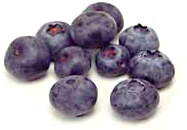
end of each berry, the calyx, forms the shape of a perfect five-pointed
star; the elders of the tribe would tell of how the Great Spirit sent
"star berries" to relieve the children's hunger during famines
Blueberries were also used for medicinal
purposes along with the leaves and roots. A tea made from the leaves
of the plant was thought to be good for the blood. Blueberry juice was
used to treat coughs. The juice also made an excellent dye for baskets
and cloth. In food preparation, dried blueberries were added to stews,
soups and meats. The dried berries were also crushed into a powder and
rubbed into meat for flavor. A beef jerky called Sautauthig (pronounced
saw'-taw-teeg), was made with dried blueberries and meat and was consumed
year round.
During the seventeenth century, settlers
from England arrived in the New World. Immediately, they set about clearing
the land and establishing farms, for they could not rely solely on supplies
from England. But the land and the climate were far different from what
they left behind. Many early attempts at farming failed. In the winter
of 1620, the Pilgrims established a settlement at Plymouth. Many perished
during the first few months, but those that survived went on to build
homes and establish farms. Their neighbors, the Wampanoag Indians, taught
the settlers new skills that helped them survive. They showed them how
to plant corn and how to gather and use native plants to supplement
their food supply. One important native crop was blueberries!! The colonists
learned from Native Americans how to gather blueberries, dry them under
the summer's sun and store them for the winter. In time, blueberries
became an important food source and were preserved, and later canned.
A beverage made with blueberries was
an important staple for Civil War Soldiers. In the 1880's, a blueberry
canning industry began in the Northeast USA.
Botany
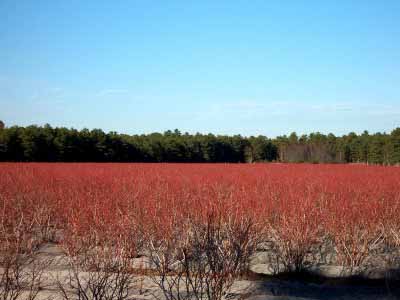
A
Blueberry field in winter |
Blueberries are one of the most popular
of the berries. They can be eaten fresh or baked into pies, muffins,
and other treats. They can be dried, canned, or frozen for use throughout
the winter. These vigorous growing plants, which don't require severe
pruning, are quite resistant to pests and diseases. The only thing these
plants are very particular about is the soil's pH, which should be around
4.0 to 5.5.This is the reason they flourish in NJ's Pine Barrens! There
are three main types of Blueberries: lowbush, highbush, and rabbiteye.
Highbush Blueberries produce an abundance of large, sweet fruits and
are found in wetlands and drier upland wooded slopes from Nova Scotia
west to Wisconsin, south to Georgia and Alabama. In the wild, these
bushes can reach a height ranging from 5 to 15 feet; in the garden,
their height ranges from 6 to 12 feet. Lowbush Blueberries produce tons
of small berries with intense flavor. A single plant usually produces
1 to 2 pints of berries. These Blueberries are very cold hardy, surviving
in the wild as far north as Arctic North America. They only reach a
height of 1 or 2 feet. Rabbiteye Blueberries are excellent for growing
in mild-winter regions including the Atlantic coast and coastal Alaska.
These tall (from 10 to 25 feet) bushes flourish where summers are hot
and humid and they tolerate dry periods better than other Blueberries.
An important step
in the development of the highbush blueberry industry came in the turn
of the century. Efforts in the early 1900's by Elizabeth
White and Dr. Frederick Coville to domesticate the wild highbush
blueberry resulted in today's cultivated highbush blueberry industry.
They selected desirable plants from the wild forests of the Northeast
USA and cultivated them to develop blueberries that could be commercially
grown by farmers. Their initial breeding work has resulted in the plump,
juicy, sweet and easy to pick cultivated blueberry we enjoy so much.
Without this cultivation work we would not have fresh blueberries in
the marketplace as we do today. White's leading six varieties are the
Rubel, Harding, Sam, Grover, Adams and Dunphy. These plants were named
after the men who searched out and found the bushes with the largest
berries. White would pay them for their time and efforts, along with
the honor of naming the bush.
North America is the world's leading
blueberry producer, accounting for nearly 90% of world production at
the present time. The North American harvest runs from mid-April through
early October, with peak harvest in July which is also known as National
Blueberry Month.
Harvest Information
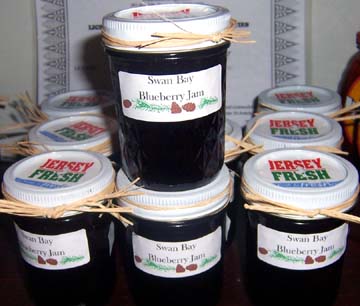
Blueberry Jam
- a local favorite!
|
Although some processed blueberries are
hand picked, a majority are mechanically harvested with specially designed
blueberry harvesters. There are several varieties, but for the most
part the concept is simple: A machine is driven or towed through the
field and mechanical rods shake the plants to drop the blueberries into
buckets or conveyors. The machines must go through the field art different
times as blueberries do not ripen at the same time. Bins of harvested
blueberries are rushed to nearby processing plants where they are dedicated
to different market channels.
U-Pick Farms in
the Pine Barrens
Blueberries may be ready for harvest as early as mid-June, through mid-August,
depending on variety and weather conditions. Be sure to call ahead!
ATLANTIC COUNTY
DiMeo's Blueberry Farms
&
Blueberry Plants Nursery
3101 Nesco Road (Route 542)
Hammonton, NJ 08037
www.DiMeoFarms.com
(609) 561-5905
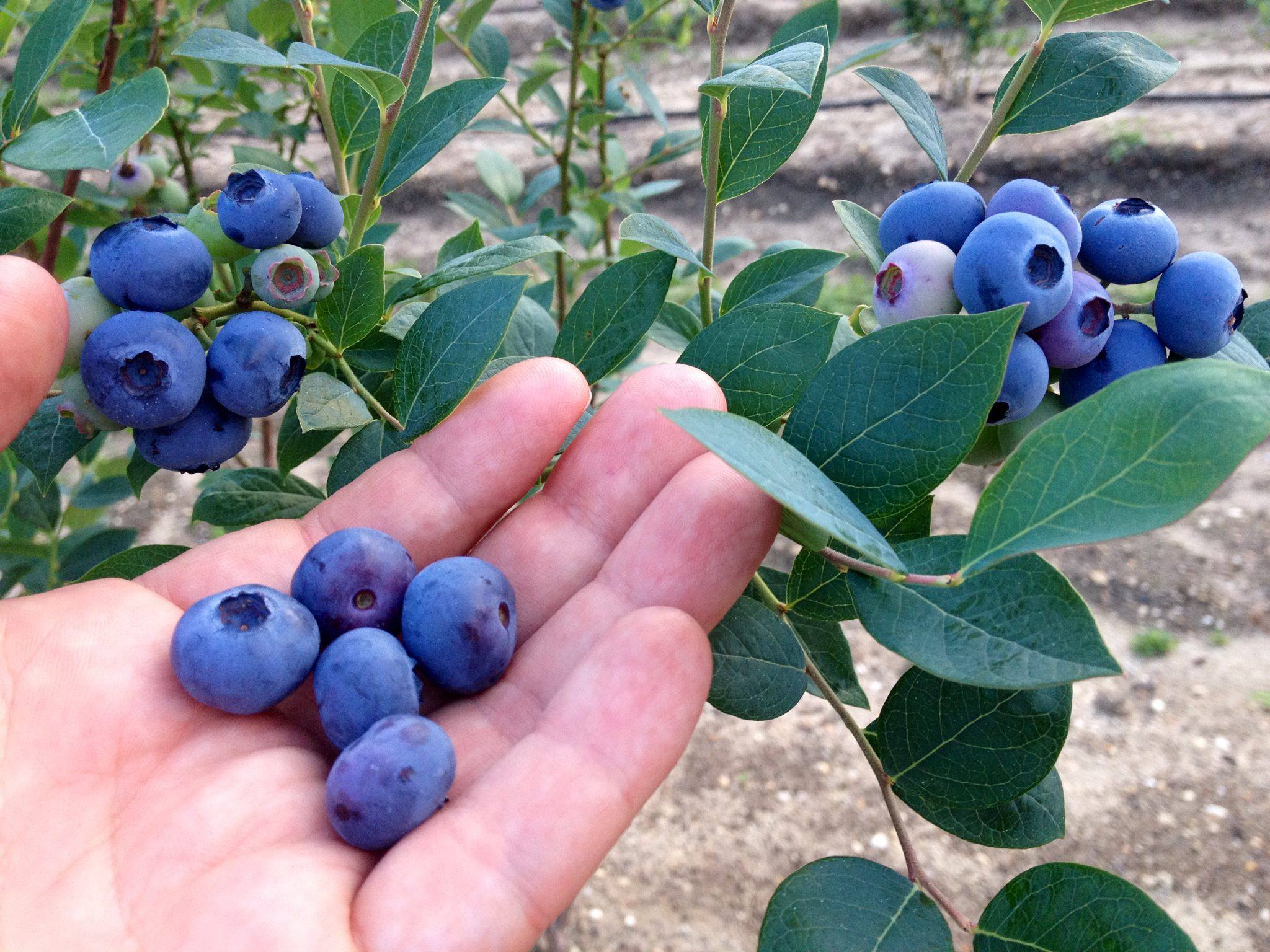
Visit DiMeo Farms for blueberry picking in South Jersey, from
about June 1st to August 25th every summer at its popular u-pick
blueberry farm. You can also purchase some beautiful New Jersey
blueberry plants from the farmer's blueberry plant nursery.
Please call first for picking availability and to get
arrival instructions!
|
B & B Farms - 250 S.
Mannheim Avenue, Egg Harbor City, NJ 08215. Phone: 609-965-5558. Directions:
Located on Mannheim Ave. 1 1/4 miles off Route 30. From north, exit
44, take Pomona Rd. South, right on Rt. 561, then right on Mannheim.
Open: Monday thru Sunday, 8 am to 4:00 pm, berries and weather permitting.
Call first! Blueberries available Mid-June thru Late
July.
BURLINGTON COUNTY
North Branch Blueberries
- Pick Your Own: Blueberries. Route 70 & North Branch Road, Browns Mills,
NJ. Directions: Route 70, 5 miles E of Four Mile Circle at Mile Market
31, turn onto North Branch Road Phone: (609) 893-5693. Open: Daily,
July, 8 am to 5 PM. Also Available: Blueberry honey.
Piper Blueberry Farm
- Pick Your Own: Blueberries. Magnolia Road, Pemberton, NJ 08068. Phone:
(609) 894-4287 or (609) 894-9227. Directions: Route 38 E to Pemberton,
Bear Right at 2nd light, approx 3 miles on Right (White Building) Open
Monday to Saturday 8 am to 5 pm, closed Sun.
OCEAN COUNTY
Emery's Berry Farm -
ORGANIC, Heritage blueberries June - Aug. 346 Long Swamp Road, New Egypt,
NJ. Phone: (609) 758-8514. Directions: Off Route 539. Open: 9 am to
4 pm. In addition to
Blueberry Fun Facts!
Blueberries are one of the few truly
blue foods on earth.
Blueberries are one of the few fruits
native to North America.
Blueberries are part of the Vacinnium
species of plants which has a relative that grows on the slopes of Hawaiian
Volcanoes!
North America is the #1 exporter of blueberries.
Blueberries and Health
Blueberries and Nutrition:
Though blueberries themselves are not
a cure-all, they contain a number of substances which are thought to
have health benefits. These substances include, but are not limited
to fructose, fiber, vitamins and antioxidants. Antioxidants thus far,
seem to have the most conclusive role in the prevention/ delaying of
such diseases as cancer, heart disease and the aging process however,
a limited number of studies, especially long term and on human beings,
are not available at this time.
One cup of blueberries contains 14%
DV of fiber 2.41 g per 100g Blueberries are a source of vitamins, minerals,
dietary fiber, phenolics, and flavonoids Blueberries are very low in
fat and sodium
Blueberries as Antioxidants:
Antioxidants are thought to help protect
the body against the damaging effects of free radicals and the chronic
diseases associated with the aging process. Blueberries contain many
of these naturally occurring antioxidants such as Vitamins C and E,containing
14 mg of Vitamin C and 0.8 mg Vitamin E per 1 cup of blueberries. In
addition, blueberries contain anthocyanins and phenolics that can also
act as antioxidants. Based on data from the USDA Human Nutrition Research
Center on Aging (Boston, MA), blueberries are among the fruits with
the highest antioxidant activity. Using a test called ORAC (Oxygen Radical
Absorbance Capacity), researchers have shown that a serving of fresh
blueberries provides more antioxidant activity than many other fresh
fruits and vegetables.
Blueberries and Aging:
In a USDA Human Nutrition Research Center
laboratory, scientists discovered that feeding blueberries to laboratory
mice slowed age-related loss in their mental capacity, a finding that
has important implications for humans. Blueberry-fed mice performed
better than their control group counterparts in motor behavioral learning
and memory.
Urinary Health:
Researchers at Rutgers University in
New Jersey have identified compounds in blueberries called proanthocyanidins
that promote urinary tract health and reduce the risk of infection by
preventing bacteria from adhering to the cells that line the walls of
the urinary tract.
Do
you have a special blueberry recipe? If so, send it to PineyPower via
FaceBook message, and we'll post it here!
Super Delicious Chatsworth
NJ Blueberry Muffins
6 T butter softened
2 eggs
1/4 tsp salt
2 3/4 c NJ fresh blueberries, washed
dash of cinnamon
1 1/4 c sugar
2 c flour 1/2 c milk
2 tsp baking powder
dash of nutmeg
Grease muffin tins or use paper liners.
Preheat oven to 375 degrees. Mix together flour, baking power and salt...set
aside. Cream butter and sugar together, mixing well. Add eggs. Add dry
ingredients alternating with the milk, to the creamed mixture. Quickly
fold in the blueberries and fill muffin 2/3 full. Sprinkle topping mixture
of 3 tsp sugar, 1/2 tsp nutmeg and 1 tsp allspice. Bake for 25-30 minutes.
Remove from oven and cover with clean towel for 10 minutes.
Contributed by Deborah Grove, Chatsworth
NJ
BLUEBERRY
CRUNCH
(My personal favorite, and sooo easy!
Ingredients
-
4
cups fresh blueberries
-
1
cup all-purpose flour
-
3/4
cup white sugar
-
1/2
teaspoon ground cinnamon
-
1/2
cup mayonnaise (do NOT use light or fat-free!)
-
1/3
cup quick-cooking oats (optional)
-
Preheat
the oven to 350 degrees F (175 degrees C).
-
Place
the blueberries into an 8 inch square baking dish. In a medium bowl,
stir together the flour, sugar, and cinnamon. Stir in the mayonnaise
until the mixture resembles coarse crumbs. Sprinkle over the top
of the berries.
-
Bake
for 35 to 40 minutes in the preheated oven, until the top is lightly
browned.
The "crunch"
is so good that you can double the recipe for it!
BLUEBERRY CREAM PIE
Baked 9" pie shell or baked crumb crust
1 pkg vanilla pudding & pie filling
mix (I don't use instant)
1 1/2 cups milk
2 Tbs butter
1/4 tsp vanilla extract
1/2 cup heavy cream, whipped
Blueberry Topping:
2 cups blueberries
1 Tbs cornstarch
2 Tbs granulated sugar
1 Tbs grated lemon rind
1 Tbs lemon juice
Prepare pudding as label directs, using
1 1/2 cups milk; add butter, extract. Pour into bowl. Cover pudding
surface with wax paper to prevent hard skin from forming. Chill. Beat
until smooth with mixing spoon. Fold in whipped cream. Fill pie shell.
Add Blueberry Topping. In saucepan, place 1 scant cup of blueberries.
Add cornstarch combined with sugar, lemon rind and juice. Cook over
low heat, mashing & stirring, until mixture thickens & turns clear.
Add the remaining whole blueberries; cool slightly. Carefully spoon
the mixture over the cream filling in pie shell. Refrigerate until served.
(Yummy)
Contributed by Arlene McAdams, Waretown,
NJ
BLUEBERRY KUCHEN (tart)
Use a 9" spring form pan
P preheat oven to 400*F.
1 cup plus 2 Tbs. Flour
2 cups plus 1 cup blueberries
1 cup plus 2 Tbs. Sugar
dash of cinnamon
1 stick (1/4 lb) butter
confectioners sugar (for decoration)
1 Tbs. White vinegar
pinch of salt
CRUST: Combine 1 c. flour and 2 Tbs.
Sugar, cut in butter to make uniform crumbs. Add vinegar, salt; blend
smooth. Press into bottom and about 1 inch up the sides of 9" spring
form pan.
FILLING: Combine 2 cups blueberries with 1 cup sugar (I use a bit less,
it's very sweet), 2 Tbs. Flour, & dash of cinnamon. Put into prepared
crust. Bake at 400*F for 50 min - 1 hr (berries will be bubbling). Remove
from oven; sprinkle with remaining cup of berries. Cool. Sprinkle with
confectioners sugar prior to serving.
Submitted by Arlene McAdams, Waretown
NJ
Blueberry
Muffins
Ingredients:
1-3/4 cups all-purpose flour
1/2 tsp. salt 2 tsp. baking powder
1/3 cup granulated sugar
1 egg 1 cup milk
1/4 cup (1/2 block) salted butter, melted
1 cup fresh or frozen blueberries
Sift flour, salt, baking powder, and
sugar together into bowl.
In separate bowl mix together egg, milk and butter until frothy.
All at once combine dry ingredients with wet.
Carefully fold in blueberries. Do not over mix. There should be some
small lumps in the batter.
Spoon evenly into greased muffin pan (12 cups).
Bake at 375°F about 35-40 minutes until tops are golden brown.
Blueberry
No-Bake Pie
Ingredients:
1-1/4 cup
water
1/4 cup cornstarch
1 (3 oz.) pkg. sweetened gelatin (flavor of choice)
2 cups frozen blueberries 1 baked 9-inch pie shell
1 cup whipped cream, lightly sweetened
Place water
and cornstarch in pan. Bring to boil stirring mixture. Sprinkle flavored
gelatin over boiled cornstarch-water and stir to dissolve. Fold in frozen
blueberries and spoon into pie crust; cover and refrigerate until set,
about 3 hours. To serve, top pie pieces with a dollop of whipped cream.
Bluetini
2 oz. Stoli
blueberi vodka
1 oz. Stoli vanilla vodka
Splash Blue Curaco
Blend ingredients over ice; serve up or on the rocks. Garnish with fresh
blueberries.
Blueberry
Crumble
Ingredients:
2 cups
fresh blueberries, lightly sugared
OR 1 21-oz. can blueberry pie filling
1 cup all-purpose flour
3/4 cup sugar
1/2 tsp. ground cinnamon
1/2 cup mayonnaise (I prefer Hellman's)
Preheat
oven to 375'.
Using extra
mayo, lightly grease bottom
of 9" baking dish, then place sugared blueberries in dish.
In medium
bowl, combine flour, sugar and cinnamon, then stir in mayonnaise. Using
fingers, scrunch mixture to form crumbs. Sprinkle evenly over blueberries.
Bake 30
minutes or until lightly browned. Serve warm with vanilla ice cream
or home made whipped cream!
Blueberry
Dumplings (courtesy of Crystal Brandt)
Every year
during blueberry season my mom would make this for us.... it was always
our favorite!!! 1 container of blueberries 1/4 cup of sugar about 1.5
cups of water let it cook down for about 15 minutes then add dumplings
(Bisquick and milk - recipe on box) cook until the dumpling looks done
(about 15 minutes).
Blueberry
Drink Syrup for Blueberry Iced Tea
(courtesy of Claire Demetroules)
4 cups
fresh blueberries or frozen, rinsed and drained
2 cups water
1 cup sugar
1 tbs fresh lemon juice
Place blueberries
in a saucepan with water. Bring to a boil, reduce heat and simmer 10
minutes. Set sieve or colander lined with cheesecloth (you can use a
thick paper towel) over a bowl and pour in the blueberry mixture. Gently
press out the juice with a spoon or by twisting the cheesecloth. Discard
the pulp and measure the juice into saucepan. Add 1/2 cup sugar for
each cup of juice and cook over medium heat, stirring until sugar is
dissolved. Bring to a boil and cook 2 minutes. Add lemon juice, Chill
and pour into covered jar. Store in refrigerator. Add two tablespoons
to each glass of prepared iced tea. Stir well and garnish with a lemon
slice.
Blueberry
Smoothie (courtesy of Tony Risos)
1 1/2
Cups Frozen Blueberries
1 Bananna
1 8 OZ. Glass of Apple Juice
4 Oz of Water
1/2 teaspoon of Cinnamon (optional)
1/2 teaspoon of brown sugar (optional)
Blend all
ingredients in a blender and enjoy!
More recipies can be found on the U.S.
Highbush Blueberry Council's
website.
© 1998-2018
PineyPower.com
Celebrating PineyPower's 20th Year!
Barnegat NJ 08005
Owner-Webmaster: Cathy Antener
Please
note: Unless
otherwise noted, all articles and photographs on this site are the property
of PineyPower, and as such, may not be reproduced without written permission.
Thank you.
Page Sources:
http://njfarmfresh.rutgers.edu/jersey-blues.asp;
http://www.blueberry.org/
|